- Within
- Posts
- Creating a Workplace that Supports Collective Healing
Creating a Workplace that Supports Collective Healing
How to build the world you want to live in

Roslyn McLarty
January 28, 2026

👋 Hi my name is Roslyn, I’m a 2x founder and executive coach. I help founders fall in love with building their companies again. Learn about working 1:1 here.
Hi there,
I’m really excited to share today’s newsletter with you.
Over the holidays, I read a book called Reinventing Organizations by Frederic Laloux — and it was one of those books that just. hit. It resonated on a whole other level and almost felt like a missing piece of the puzzle when it comes to my purpose and the work I’m here to do.
At its core, Reinventing Organizations explores how organizations can be led in ways that align with evolving levels of human consciousness.
The reality is that many of our current institutions — corporations, governments, and public services — are still operating from structures that are two or three “levels of consciousness” behind where we are capable of being. So… we’ve got some work to do. 😮💨
That’s what today’s newsletter is about: how you, as a founder and leader, can be part of creating the change the world so clearly needs right now.
We’ll explore:
How to reframe your power as a founder to create meaningful change
Practical ways to cultivate safety, belonging, meaning, and growth within your organization
Let’s jump in.
And also if you’re in NYC, I’d love to see you at our next Within Walk!

Creating a Workplace that Supports Collective Healing
It’s weeks like this one that make it painfully clear that the systems currently running our world are not supporting individual or collective wellbeing.
At times, that realization can feel overwhelming. We feel powerless. We wonder, Does resharing a post on social media actually do anything? or I feel guilty for not doing more.
Well, my founder friend, I want to offer you a reframe.
As a founder, you have immense power to create the conditions for a new world to emerge. Through the products you build, the organizations you create, and the teams you lead, you are quite literally shaping a small corner of the future.
You have the opportunity to build a new world — one that serves as a real alternative to the one we’re currently living in.
Think about it…
Are you frustrated that people’s basic human needs aren’t being met?
Then you can start by meeting the basic human needs of the people who work for you.
Are you angry about the inequality and oppression playing out around us?
You can create equal access to opportunity, growth, and meaningful contribution within your company.
Are you resentful of leaders who hoard wealth, power, and influence?
Then look inward — and steward your company so power, profit, and voice are more equitably distributed.
Are you grieving the widespread loss of humanity and care for the collective?
Then restore it within the walls of your company.
The truth is, the world NEEDS you.
Of course, protesting unjust systems and holding those in power accountable is absolutely vital. And we also need builders. We need people who are creating new ways of working, leading, and relating that others can move toward.
As existing systems of power continue to fracture and break down, we need better alternatives ready and waiting.
We need workplaces and communities that offer a different way forward.
And you are already participating in creating that new world through your company, whether you’re conscious of it or not.
So the question becomes: how do we do this?
How do we create organizations where people can show up as their whole selves?
Where they experience safety and belonging?
Where their work feels meaningful?
Where they are supported to grow, unfold, and become more fully who they are?
Organizations where purpose leads, and profit follows.
How do we do that?
First of all, we need to shift from asking:
“How do we get the most out of people?”
to
“How do we create conditions where people can thrive and naturally do great work?”
At the deepest level, these conditions are met when companies meet four human needs simultaneously:
Safety
Belonging
Meaning
Growth
The principles that follow explain how we can support the fulfillment of these needs.
Throughout them, I draw on wisdom from Frederic Laloux’s Reinventing Organizations, which offers a powerful framework for building more humane, purpose-driven ways of working. If this work resonates with you, I highly recommend the book.
1. ESTABLISH PSYCHOLOGICAL, MATERIAL AND NERVOUS SYSTEM SAFETY
People can’t show up whole, or contribute meaningfully, when they’re stuck in survival mode. When people don’t feel safe, they default to self-protection. When they feel safe across their mind, body and material needs they can re-engage with their work and each other from a place of trust.
Conditions for material safety:
Compensation meets people’s basic human needs (housing, food, healthcare, rest)
Pay is predictable, fair, and transparent relative to role, responsibility, and context
Clear expectations are set around growth, stability, and long-term security
Read more: How to Pay People Intentionally
Conditions for psychological safety:
People can speak honestly without fear of punishment, shame, or retaliation
Dissent, uncertainty, and emotion are welcomed as information
Leaders model vulnerability, accountability, and repair
Conditions for nervous system safety:
Work rhythms support regulation rather than chronic urgency
Sustainable pace of work, rest, and clear boundaries are encouraged
Traditional “culture fit” can create environments where people feel they need to contort themselves to belong. Healthy organizations invite people to be in integrity, where they don’t need to wear a mask at work that’s different from who they are underneath.
Practices:
Honor people in their wholeness, not just their role or title
Legitimize emotions, intuition, values, and life context as relevant to work
Design roles around people’s strengths, interests, and callings
Treat roles and job descriptions as living, evolving agreements
Reduce hierarchy and status markers that encourage masking or posturing
Create belonging through contribution, rather than conformity
Name shared values clearly and address misalignment openly
Keep reading: How to Build a Culture Rooted in Values
3. MAKE WORK PERSONALLY MEANINGFUL
People want to know why their work matters to the organization and to themselves.
Practices:
Regularly connect individual roles to the larger purpose
Invite people to shape their roles around strengths and interests
Ask reflective questions like: What work feels most alive for you right now?
Treat meaning as an ongoing conversation
Keep reading: Unlocking Your Team’s Zone of Genius
4. CREATE RITUALS THAT FOSTER REAL HUMAN CONNECTION
Rituals create nervous system safety by offering rhythm, predictability, and shared meaning. When people feel regulated and connected, they are better able to self-manage with clarity and accountability.
Practices:
Opening check-ins with truly caring: “How are you really?”
Reflection and intention-setting rituals (monthly/quarterly)
Story-sharing or interest-sharing spaces (career journeys, life moments, creative interests, challenges)
Mark transitions: launches, failures, growth and endings
5. SUPPORT GROWTH THROUGH UNFOLDING PEOPLE’S GIFTS AND PURPOSE
Rather than growth being about pushing people up a ladder, make it about helping them express who they are becoming, in service of the organization’s purpose.
Many people have spent years overriding their intuition to “be successful.” This approach heals that by helping people reconnect to who they are and bringing their wholeness into their work.
Shift from performance plans to growth and unfolding conversations
Focus development on gifts, strengths, and curiosities, not just skill gaps
Ask questions like:
What energizes you vs. drains you?
What are you being called to grow into?
Help people name and trust their unique gifts and intuition
Allow roles and responsibilities to evolve as people grow
Value learning, experimentation, and inner development as real work
Keep reading: How to Run High Impact 1:1’s
6. REDEFINE LEADERSHIP AS STEWARDSHIP AND CARE
Leaders are not there to control people or drive outcomes. Rather, they are there to protect the conditions in which the organization’s evolutionary purpose and people can thrive.
Many people carry deep wounds from unsafe authority figures. Stewardship-based leadership restores faith that power can be used with integrity.
Leaders hold the space rather than having all the answers
Authority is exercised through trust, not control
Power is distributed to those closest to the work
Leaders practice self-awareness and take responsibility for their inner work
Leaders notice when fear, identity, or control impulses are driving decisions
Wholeness is modeled publicly through humility, honesty, and repair
Leadership intervenes to protect safety, trust, and values
Integrity is prioritized over speed, optics, or personal status
People feel part of something when they have agency, influence and responsibility for what the organization becomes.
Shift from permission-based cultures to trust-based ones
Use the Advice Process for decision-making rather than top-down mandates
Make transparency the default around strategy, finances, and tradeoffs
Treat people as adults capable of holding complexity
Pair autonomy with accountability for outcomes
Let teams self-organize around work they feel called to
8. TREAT CONFLICT AS AN OPPORTUNITY FOR INTEGRATION
In healthy organizations, conflict is not avoided or escalated up a hierarchy. It’s worked through directly and respectfully amongst those involved.
Practices:
Address tensions directly between the people involved
Use clear, shared processes for raising and resolving conflict
Encourage ownership of feelings and needs rather than blame
View conflict as information about misalignment or unmet needs
Involve peers or mediators only when needed to support repair
Keep reading: Non Violent Communication resource for founders
9. HONOR PEOPLE AS WHOLE HUMANS ACROSS LIFE STAGES
Healthy organizations recognize that work is only one part of someone’s life.
Practices:
Flexible structures that adapt to life changes, seasons, and capacity
Trust-based policies rather than rigid rules
Support during illness, grief, caregiving, and major transitions
Normalize rest, boundaries, and time away
Long-term sustainability prioritized over short-term extraction
10. HOLD AN ORGANIZATIONAL NARRATIVE OF GROWTH AND BECOMING
In healthy organizations, the company is treated as a living system with its own evolutionary journey. People feel part of something alive, that they are helping shape.
Practices:
Regularly reflect on what the organization is learning and becoming
Share stories of purpose-aligned decisions and turning points
Name failures, growth, and course corrections openly
Let strategy emerge from reflection
IN CONCLUSION
If we’re going to create real change in the world, we can’t do it alone.
Especially in a culture that rewards urgency and constant self-optimization, we need spaces t hat ground us, to help us step out of dominant narratives long enough to remember what actually matters.
We need environments that bring us back to our values, our purpose and the truth that we are whole humans.
So much of our culture rewards people for optimizing the individual: more wealth, more power, more influence, more productivity, more status. It can make our desire to build something meaningful feel naïve or impractical.
But the impulse to contribute to something larger than ourselves isn’t weakness. It’s human nature.
At a soul level, we’re wired for connection and contribution. We’re meant to heal and serve the collective, not just extract from it. Wanting to build organizations that value people, restore dignity, and support growth isn’t idealistic. It’s actually intuitive.
When we build companies and communities that reflect that truth, places where people can belong, contribute meaningfully, and grow, we aren’t just offering a better way of working.
We’re offering a different way of being.
We’re offering a new world for others to live in.
And if you read through all of these principles and said: I am way off! I’m not even sure this is realistic for me!, that is very understandable.
So many of us have only been modeled the dominant way of building companies, so it can be hard to imagine a different path. You don’t need to overhaul everything. Just notice if there was any part of this that felt inspiring or accessible.
What’s one small thing you can shift today?

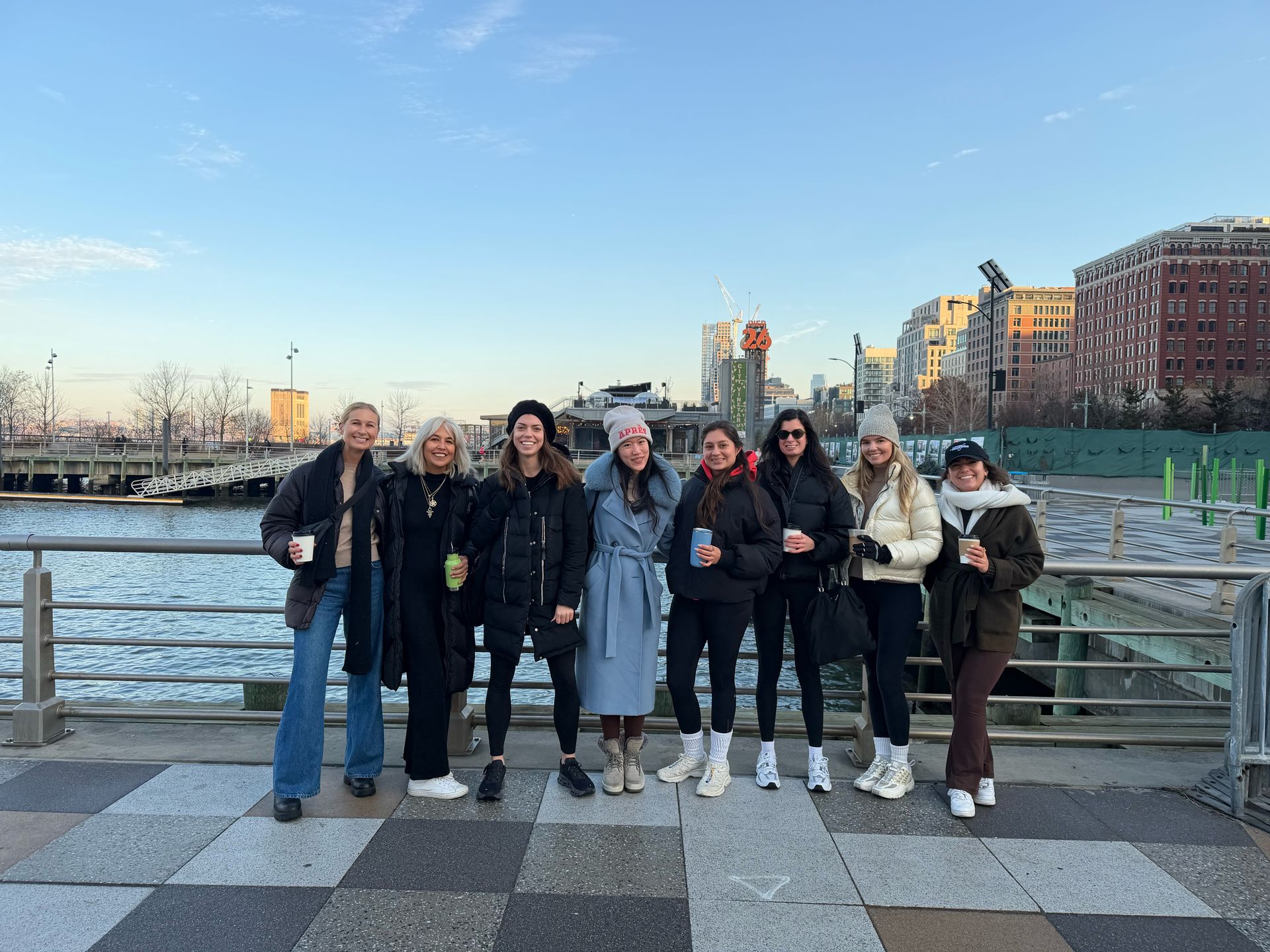
WITHIN WALKS
Join us for our next Within Walk for female founders this Friday, February 7th.
Start your day with movement outdoors + coffee + deep & meaningful chats with other founders.
Leave feeling more open, expanded and in community with others doing the really hard thing that is entrepreneurship.
PS, if it’s freezing, we’ll stay inside the cafe and I’ll lead a discussion around our theme instead of walking outside!
WINTER FOUNDER CIRCLE
I’m co-hosting a winter circle for women founders on February 2nd.
I’ll be guiding a reflection circle to explore what's ready to emerge this year, what you're being asked to release and who you're becoming in this next chapter.
Expect intimate conversations with fellow founders where you can remove your mask, be seen and supported in your real emotions, challenges and desires.
RSVP here.


1:1 Coaching: If you’d like to explore how a coaching parntership might support you, you can book a free coaching consultation to learn how we can work together.
Walk with us: Join for our next Within Walk.
Let’s be friends: on LinkedIn and Instagram. I share more startup content and what’s going on behind the scenes there.
Finally, tell me how you liked this newsletter. I read every piece of feedback.
How did you like this newsletter? |
Thank you for being here as always.
With love,
Roslyn 💚
Reply